Choosing the Right Size for Your Decking Project in Edinburgh
- The Build Bible
- May 31
- 3 min read
When planning a decking project, one of the most common questions is: what size should my decking be? Getting the size right is crucial for creating a comfortable, functional outdoor space that complements your garden design. Too small, and the deck feels cramped; too large, and it can overwhelm your garden or waste space and resources. This guide will help you find the perfect decking size for your needs, balancing aesthetics, usability, and budget.

Understand Your Space and Needs
Start by measuring the available area in your garden. Use a tape measure or a laser distance measurer to get accurate dimensions. Consider any fixed elements like trees, garden beds, or pathways that might limit the deck size.
Next, think about how you want to use the decking:
Dining area: Will you have a table and chairs? A typical dining set for six needs about 10 by 12 feet (3 by 3.6 meters).
Lounge space: For sofas and coffee tables, allow at least 12 by 14 feet (3.6 by 4.3 meters).
Entertainment: If you plan to host gatherings, add extra space for movement and standing areas.
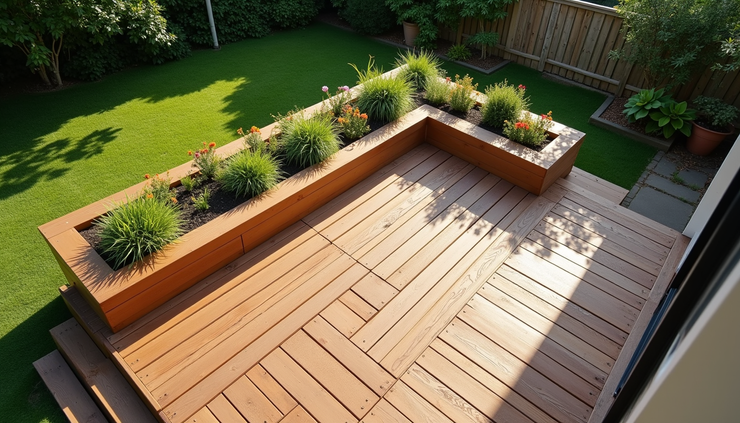
Gardening: Some decking designs include planters or space for pots, which require additional room.
Knowing your primary uses helps avoid oversizing or undersizing your deck.
Consider Proportions and Garden Design
Your decking should fit naturally within your garden design. A deck that is too large can dominate the space and reduce green areas, while a small deck might look out of place.
Balance: The deck should complement other garden features, such as lawns, flower beds, or patios.
Shape: Rectangular decks are common, but L-shaped or multi-level decks can better fit irregular spaces.
Flow: Ensure smooth transitions between the house, deck, and garden paths.
For example, if your garden is 20 by 30 feet, a deck around 12 by 18 feet can provide ample space without crowding the garden.
Decking Material and Board Size Impact Dimensions
The choice of decking material affects the overall size and appearance. Standard decking boards come in widths of 5.5 to 6 inches (14 to 15 cm), but some composite or hardwood boards vary.
Board width: Wider boards cover more area quickly but may cost more.
Board length: Longer boards reduce the number of joints, improving aesthetics.
Spacing: Leave small gaps between boards for drainage, usually 1/8 to 1/4 inch.
When calculating decking size, include these factors to estimate the number of boards and total material needed.
Practical Size Guidelines for Common Decking Uses
Here are some practical size recommendations based on typical decking uses:
| Use Case | Minimum Size (feet) | Minimum Size (meters) | Notes |
|-------------------|---------------------|----------------------|--------------------------------------------|
| Small seating area | 8 x 8 | 2.4 x 2.4 | Fits a small table and two chairs |
| Dining area | 10 x 12 | 3 x 3.6 | Comfortable for six people |
| Lounge area | 12 x 14 | 3.6 x 4.3 | Space for sofas and coffee table |
| Large entertaining| 16 x 20 | 4.9 x 6 | Room for multiple seating groups and movement |
Adjust these sizes based on your garden design and personal preferences.
Plan for Future Use and Flexibility
Think about how your needs might change over time. If you expect to host larger gatherings occasionally, consider a slightly larger deck or a design that allows easy expansion.
Modular designs: Some decking systems let you add sections later.
Multi-level decks: Create zones for different activities without increasing the footprint.
Storage: Incorporate space under the deck for garden tools or cushions.
Planning ahead saves time and money if you want to adapt your garden design later.
Check Local Regulations and Safety
Before finalizing your decking size, check local building codes and regulations. Some areas have limits on deck height, size, or require permits.
Setbacks: Minimum distance from property lines.
Height restrictions: Affect railing and stair requirements.
Load capacity: Ensure the deck supports intended use.
Following these rules avoids costly fines and ensures safety.
Final Tips for Choosing Decking Size
Visualize with sketches or software: Draw your garden and overlay decking sizes to see what fits best.
Consult professionals: Landscape designers or decking specialists can provide tailored advice.
Think about furniture: Measure your outdoor furniture and leave space for comfortable movement.
Consider maintenance: Larger decks require more upkeep, so balance size with your willingness to maintain it.
Choosing the right size for your decking project enhances your outdoor living experience and complements your garden design beautifully.


Comments